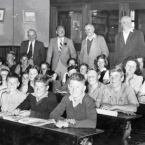
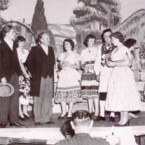
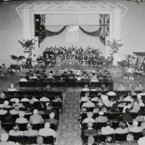
04 – BLOOMFIELD HALL Canoblas Dr, Bloomfield Bloomfield Hall became renowned in the 1950s and 60s as a place of first-rate entertainment, largely through the exceptional talents and hard work of a number of migrants who worked at Bloomfield Hospital. Bloomfield Theatrical Society, which was founded in 1954, staged many popular musical shows, including The [...]
more
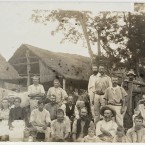
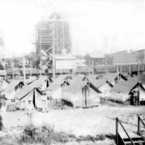
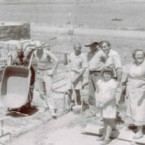
03 -’TENT CITY’ COMMONWEALTH MIGRANT HOSTEL Edward St, Orange Accommodation in Orange was scarce when post-war migrants started arriving in the late 1940s. The first group of male migrants to be allocated work at the Emmco factory were given two-man tents to live in situated on land between the factory and the railway line. ‘Tent [...]
more
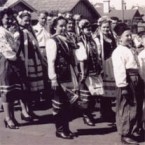
07 – UKRAINIAN HALL Dalton St & Clinton St, Orange Orange’s Ukrainian community constructed this hall so that they could hold dances and other social functions. Recorded or live music added to the occasion and the events were so popular that they attracted people from throughout Orange and beyond. Australians were welcome also and some [...]
more
05 – TYNAN STREET Tynan St, Orange During the 1950s Tynan Street became almost exclusively home to migrants of various ethnic backgrounds. Attracted by cheap land, they usually built a ‘temporary dwelling’ first, then as funds became available, helped one another to build simple but adequate houses for their families. The parents often worked and [...]
more
06 – STRAND THEATRE Summer St & Peisley St, Orange The Strand Theatre was one of a number of venues in Orange where migrants attended naturalisation ceremonies. Perfunctory ceremonies had originally been held in court houses, but when Orange City Council took over it was felt that such an important event should be held in [...]
more
Executive Producer John Petersen Original Concept, Virtual Curator, Project Manager and Author Stephen Thompson Designer Annette Loudon Policy and guidelines drawn from the Heritage Collections Council’s Significance manual Thanks to Museum of the Riverina, British Archives, British National Maritime Museum, Australian National Maritime Museum, Mitchell Library: State Library of NSW, Department of Environment & Conservation, [...]
more
What is ‘significance’? Significance means the historic, aesthetic, scientific and social values that an object or collection has for past, present and future generations. Significance refers not just to the physical fabric or appearance of an object. Rather, it incorporates all the elements that contribute to an object’s meaning, including its context, history, uses and [...]
more
‘Movable heritage’ is a term used to define any natural or manufactured object of heritage significance. Movable heritage may be an integral part of the significance of heritage places. It can also belong to cultural groups, communities or regions of New South Wales. Like other types of heritage, it provides historical information about people’s experiences, [...]
more
Objects through Time is a virtual museum that takes you on a journey. Objects speak to us about our past. Explore important chapters, places and events in Australian migration history and discover the people who have shaped Australia’s culture and society. Across Australia museums, galleries and communities are custodians of important heritage collections. Objects though [...]
more
List of Objects Through Time statements of significance that are currently visibly on map (this changes as you zoom in and out) : Bookmark on DeliciousRecommend on FacebookShare with StumblersTweet about it
more
After more than 200 years of migration, Australia has become a multicultural society. By 1990, 40% of people in Australia were born overseas and over 100 languages were spoken. Australian culture has transformed from the stiff Britishness of the early 20th century to the multiplicity of influences we have seen around us in the last [...]
more
Australia & Asia Bookmark on DeliciousRecommend on FacebookShare with StumblersTweet about it
more
New Australia Bookmark on DeliciousRecommend on FacebookShare with StumblersTweet about it
more
World War Two Bookmark on DeliciousRecommend on FacebookShare with StumblersTweet about it
more
Plagues and pandemics Bookmark on DeliciousRecommend on FacebookShare with StumblersTweet about it
more
The Great War, World War I. German Internment Bookmark on DeliciousRecommend on FacebookShare with StumblersTweet about it
more
Aboriginal protection legislation passed by NSW Parliament. New South Wales gold rushes and Robertson Land Acts. Development of urban and regional industries with migrant workers. Moves to federate Australian colonies. Bookmark on DeliciousRecommend on FacebookShare with StumblersTweet about it
more
Assisted immigration introduced Bookmark on DeliciousRecommend on FacebookShare with StumblersTweet about it
more
The Age of Macquarie: Exploration of NSW interior & coastline, 13 counties established to control land usage in areas beyond government control. Wool industry developed, farming developed and free settlement begins Bookmark on DeliciousRecommend on FacebookShare with StumblersTweet about it
more
Dutch map west coast of Australia and Van Diemens Land Bookmark on DeliciousRecommend on FacebookShare with StumblersTweet about it
more
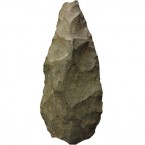
Aboriginal people migrate to Northern Australia through Asia Aboriginal rock painting of Macassan prahu in Arnhem Land, c.2011. Courtesy Australian National University Homo sapiens or humans evolved in Africa about 200,000 years ago, reaching modernity about 50,000 years ago. Prior to the arrival of humans in Europe, the Middle East and Asia, these places were [...]
more
The cane knife is historically significant as evidence of the manual labour of the many South Sea Islanders, Indians and migrants from Europe who were the backbone of the sugar industry in northern NSW.
more
The spaghetti maker and dolls are historically significant as evidence of migrant folk art transplanted from Italy to the Fairfield in the suburbs of Sydney.
more
Migrants have played a significant role over many years in the history and development of Orange, especially in the two decades immediately following the end of World War II. Visit the sites and discover more about the migrants and how they settled into Australian life. The earliest post-war migrants were from the Baltic countries of [...]
more
02 – EMMCO FACTORY (LATER EMAIL LTD) Edward St, Orange Hundreds of migrants were allocated employment at the Emmco (later Email) whitegoods factory because in the 1950s and 60s it was the city’s major employer. It produced fridges, freezers, washing machines and other household electrical goods at a time when business was booming. Language difficulties [...]
more