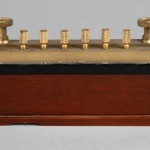
A collection of telegraphy equipment used by the Postmaster General’s Department of between 1901 and 1937.
more details »
A collection of telegraphy equipment used by the Postmaster General’s Department of between 1901 and 1937.
more details »
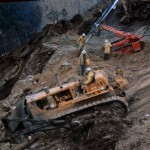
White painted Bakelite hard hat, Snowy Mountains Authority, Australia, c 1953-1954. Standard issue protective clothing for use on the Snowy Mountains Hydro-electric scheme.
more details »
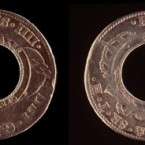
Holey dollar, silver, Charles IV, Mexico Mint, 1806. Restruck in, New South Wales, 1813. Currency by Governor Macquarie’s Proclamation, 1 July 1813.
more details »
Watercolour on ivory miniature in oval gilt frame. The miniature shows William Bligh in uniform of an Admiral.
more details »
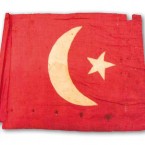
The Broken Hill Ottoman Flag is rare being unique and one a few items from the New Years Day attack at Broken Hill in 1915.
more details »
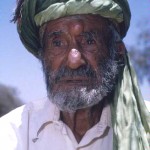
Former mosque relocated from the Afghan Camp and later the cemetery in Broken Hill.
more details »
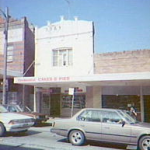
The Greg Ritchie Negative Collection is a collection of over 3000 negatives featuring buildings and other sites in the City of Canterbury. Between 1990 and 1998 Canterbury City Council staff documented their day-to-day duties through photographs.
more details »
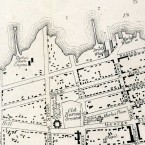
Discover the history behind the City of Sydney’s headstone, in memory of Eliz Steel who died in 1795. It was uncovered at Sydney Town Hall during excavations.
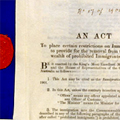
more details »This document has historic value because it has direct links with Federation and the drafting of the first Australian Constitution that put in place the law that was the cornerstone of Australia’s ‘White Australia’ policy.
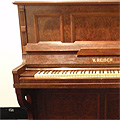
more details »The piano is historically significant as evidence of piano manufacturing in Australia prior to the World War I through to 1936, as it is possibly one of the last upright pianos, made by Carl von Heiden in his Sydney factory between 1904 and 1914.
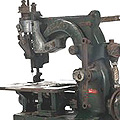
more details »The textiles machines are of historic significance as evidence of the transfer of haberdashery and tailoring of clothing from the Italian village to Fairfield in the Australia suburbs.
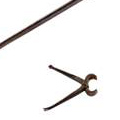
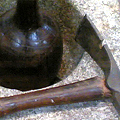
more details »The pincers are historically significant as they were made by Carl Konemann. The Konemanns’ are regarded as one of the early pioneering families in Fairfield, providing the essential services of horse shoeing, tool making and repairs and coach building.
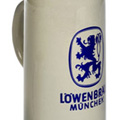
more details »The Bier stein and eisstock game piece are social and culturally significant. The German-Austrian Society of Australia Club was formed to assist Post World War II migrants to resettle into suburban Fairfield community life between 1945 and 1960, and fulfil an important social and cultural role in an alienating culture.
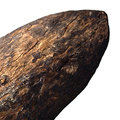
more details »The shield holds considerable historic value of the first contact between Europeans and Aboriginal people on the east coast of Australia.
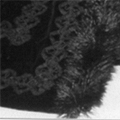
more details »The cape has historical significance as evidence of the experience of women in middle class families in the nineteenth century and of colonial millinery and clothing retail practices.
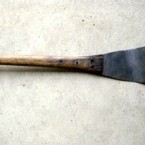
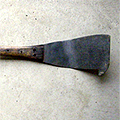
more details »The cane knife is historically significant as evidence of the manual labour of the many South Sea Islanders, Indians and migrants from Europe who were the backbone of the sugar industry in northern NSW.
more details »Discover the Jirin and Medaha that was handmade by Joseph John Isaac in 1938. The Jirin and Medaha were used to make ‘Kibee’ a traditional Lebanese dish.
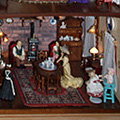
more details »The dollhouse has historic significance as evidence of post World War 2 refugee migration to Australia and the traumatic experience of dislocation and separation from family.
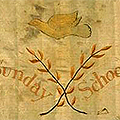
more details »The banner has historical value as a rare fabric banner from convict era Parramatta.
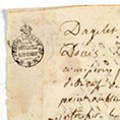
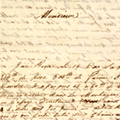
more details »Discover the letter from Joseph Dagelet, astronomer from 1788 Lapérouse Expedition, to William Dawes, astronomer to the First Fleet and British Settlement at Port Jackson, that provides advice on building the colony’s first observatory.
more details »The letter from Frenchman Francis Barrallier to Governor King in 1802 during an expedition seeking a route across the Great Dividing Range is historically significant as a rare document describing and interpreting a French view of the pre-1788 Sydney Aboriginal people’s environment and culture.
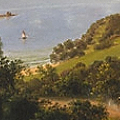
more details »Discover the 1865 painting of the entrance to Port Jackson titled Sydney Heads by German artist Eugene von Guérard.
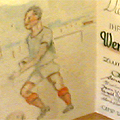
more details »Discover the collection of objects from the German and Austrian refugees who transported to Australia on the SS Dunera and were later interred at Hay internment camp during World War Two.
more details »
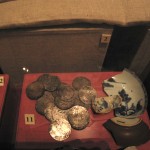
Discover the Dutch Vergulde Draeck Collection excavated from the VOC ship Vergulde Draeck that was wrecked on the Western Australian coast in 1656.
more details »Discover a collection of late nineteenth century personal effects and shop stock owned by the Wong’s – an Anglo-Chinese family from Bolong, Australia.
more details »The harrow is part of a series of regional collection of objects integral to the story of the Chinese on the goldfields, agriculture and the establishment of regional Chinese communities.
more details »Discover the medal presented as a mark of esteem to Charles De Boos, Gold Fields Warden, from Chinese Miners in the Braidwood district in 1881.
more details »Discover a typical opium pipe used by nineteenth century Chinese miners that is a part of a series of regional collections integral to the story of the Chinese on the goldfields and the establishment of regional Chinese communities.
more details »Discover the Lapérouse Museum’s collection of objects from the ill fated expedition of Jean François de Lapérouse in 1785 -88, France’s great voyage of discovery of the Pacific. La Pérouse met the British First Fleet and Aboriginal people at Botany Bay NSW on the 26th January 1788.
more details »Discover the model fishing boat Kie Gang Kg 02979 made by Lai Duc while staying at Pu Lau Bi Dong, an island refugee camp in Malaysia, in the 1980s.
more details »