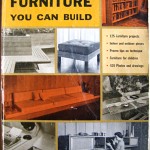
Meet George Bansagi and see the furniture magazine he used to build items for his first house in Wollongong in the late 1960s. Continue reading
view stories of migrants
who stayed at bonegilla migrant accommodation
who stayed at bonegilla migrant accommodation
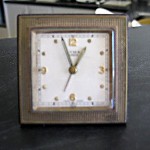
Meet Domenico Sidonio and see the clock that woke him up for work in the
Snowy Mountains in 1953.
Continue reading
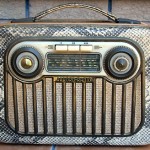
Meet Trudy Schilling and see the heating element and jug she used to make her own coffee at Bonegilla migrant hostel in 1959. Continue reading
!["There were originally 60 or so German music records I carried over in my briefcase, but now I have only a dozen [and] they’re pretty worn out. They were songs we grew up with, and on hot summer nights in Bonegilla, it was wonderful to listen to our own music. I think it helped us bridge those first few months in Australia to get over our loneliness."](../cms/wp-content/uploads/2009/06/wolff-records-150x150.jpg)
Meet Harry Wolff and see the German records he played at Bonegilla migrant camp in 1966.
Continue reading
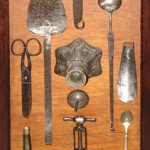
Meet Anton Potocnik and see his family kitchen utensils from Slovenia.
Continue reading
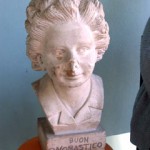
Meet Elisa Pizzuti and see the bust her husband sculpted of her in Italy in the late 1940s. Continue reading
!["This set square from Hungary is a reminder of my education, but also of the education I was unable to attain [during the Communist era], although I had the ability."](../cms/wp-content/uploads/2008/10/setsquare-150x150.jpg)
Meet Imre Molnar and see his school book from Communist Hungary.
Continue reading
!["My husband was a fine cabinetmaker. I have one [item from] the early years when we come out here - just a little cassette. I didn’t ask him, he just made it for me. He made this type of furniture in Austria."](../cms/wp-content/uploads/2008/10/timber_sm.jpg)
Meet Elizabeth Mergl and see the clock she used to time feeding her baby son as they fled from Hungary to Austria in 1944. Continue reading
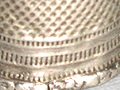
Meet Inga Krain and see her sugar cube holder from Germany. Continue reading
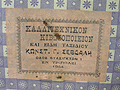
Meet George Kotsiros and see his Greek-English dictionary. Continue reading
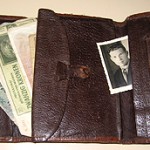
Meet John Kena and see his tractor driving license from 1941 when Estonia was Soviet-occupied. Continue reading
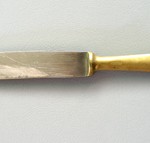
Meet Edda Marcuzzi and see the remaining item from her 24-piece cutlery set.
Continue reading
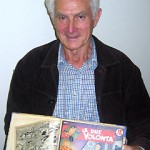
I was born in 1935. My mother Caterina and I were originally from Pola in Istria, then in Italian territory. Continue reading
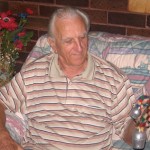
Meet Hans Kaiser from Tweed Heads and see his mother’s see his miniature cow bells from Austria.
Continue reading
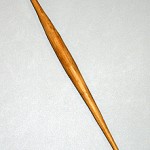
Meet Draga Williams and see the first embroidery sampler she made in 1945 at a Displaced Persons’ camp in Egypt. Continue reading
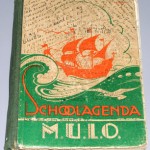
Meet Anne Hawker and see her handwritten school diary from Holland.
Continue reading
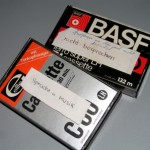
Meet Peter Gwosdz and see the cassette tapes his parents sent from Germany.
Continue reading
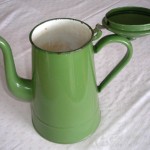
Meet Maria Goulding and she her Dutch coffee pot.
Continue reading
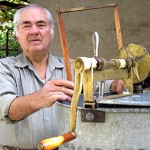
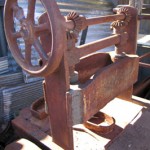
Meet Constantinos Frangonasopoulos and see the machine he used to make 45,000 bricks for his house in Broken Hill in 1959. Continue reading
!["There is a great maritime tradition in my family and I still have one cap. Normally [it] would have the name of the company or ship you were sailing on, but this one doesn’t so I kept it as a keepsake. I travelled the world with my job [and] I feel fortunate because it does give you a special viewpoint."](../cms/wp-content/uploads/2008/09/photo25-150x150.jpg)
Meet Georges Devriendt and see his Belgian Merchant Navy cap. Continue reading
!["When I was working in the machinery factory after the Second World War, I had a Dutch Workers’ Union book. [It] was used to put a stamp in each week when I paid my union fee; it was a record of my contribution. These contributions went towards workers who were ill and unable to work or to create fairer work conditions. I felt it was important to support the union."](../cms/wp-content/uploads/2008/09/book2-150x150.jpg)
Meet Jan De Kruiff and see his from union book from Holland. Continue reading
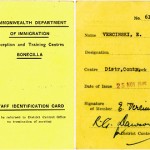
Meet Eleonora Conolly and see her mother’s serviette ring from Serbia.
Continue reading
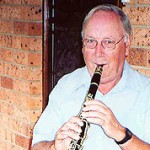
Meet Ferdi Boers and see the clarinet he brought over from Holland.
Continue reading
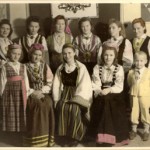
Meet Amelia Brinkis and see the saucepan made by fellow Latvians at their Displaced Persons’ camp. Continue reading
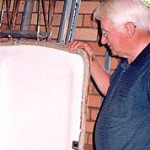
Meet Wilhelm & Hilde Bittkow and see their fridge. It was one of the first items they bought after arriving in Orange in 1953. Continue reading
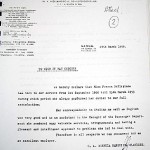
Meet Franca Arena and see her letter from an Australian official in 1959. Franca was asked to give English lessons to Italian passengers on her boat to Australia. Continue reading